Independent grocers are at a turning point.
The competition is no longer just the store across the street. It’s Amazon. It’s big-box retail. It’s delivery platforms. It’s retail media networks. And most importantly, it’s whoever owns the customer data.
In a recent conversation at the Shopper Direct office, we broke down what I believe is one of the most important shifts underway in independent grocery: the move from fragmented marketing tactics to a fully connected Shopper Engagement Ecosystem.
Here are the key takeaways.
1. Personalization is no longer optional.
Recent data shows that 76% of shoppers expect personalized experiences. That means generic weekly ads and paper circulars alone won’t drive loyalty anymore. Shoppers expect relevant offers, delivered in real time, on their phones.
If independent grocers want to compete, they must move toward SMS, mobile loyalty wallets, targeted promotions, and data-driven messaging.
2. Loyalty drives retention — and revenue.
84% of shoppers remain loyal when points and rewards are part of the experience. Loyalty isn’t just a “nice to have” — it’s a retention engine.
One case we discussed showed 23,000 shoppers generating $9.9 million in incremental revenue over 12 months. That’s not theory. That’s execution.
And even an $8 lift in average order value can dramatically impact annual revenue.
Learn about the Shopper Direct Loyalty Program.
3. Data unification is the real advantage.
Many independents collect data in pieces — POS here, email there, paper sign-ups somewhere else. But when you unify loyalty data, kiosk data, SMS open rates, and in-store engagement into one intelligence layer, something powerful happens:
You can segment customers.
You can personalize campaigns.
You can forecast better.
You can sell retail media with proof.
This is where independent grocers begin to compete at a much higher level.
See how Shopper Direct Delivers Business Intelligence.
4. Engagement must happen everywhere.
Today’s winning stores engage shoppers:
• On their phones (SMS + mobile ads)
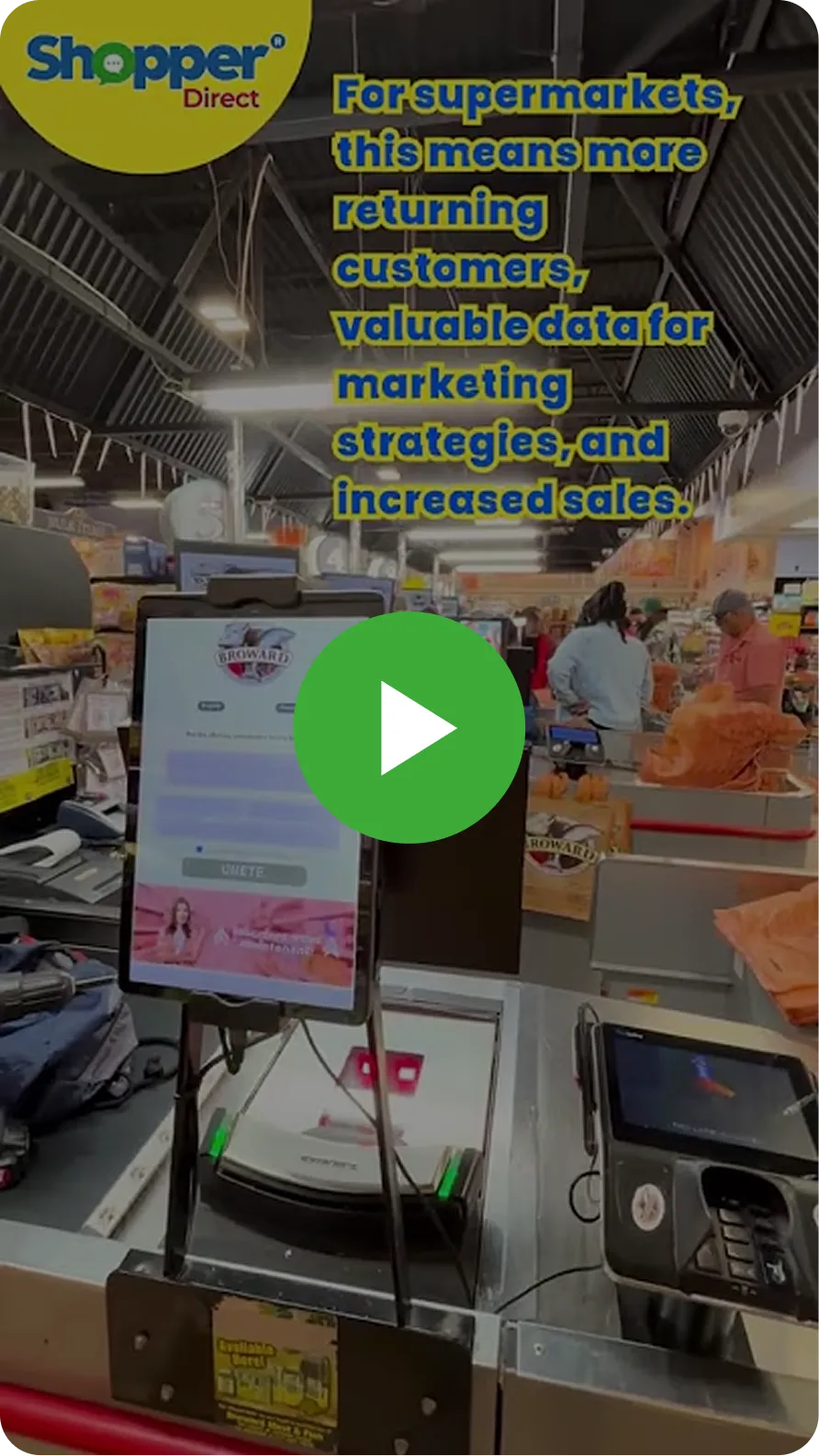
• At the register (loyalty sign-up + digital wallet)
• In-store (4K digital signage + in-store radio)
• Outside the store (LED window displays)
• Through kiosks (self-order + meal planning)
• Even via geo-targeted messaging
This isn’t about adding gadgets. It’s about building a connected ecosystem that keeps the shopper engaged 24/7.
See the Shopper Direct Ecosystem and how it can work for you.
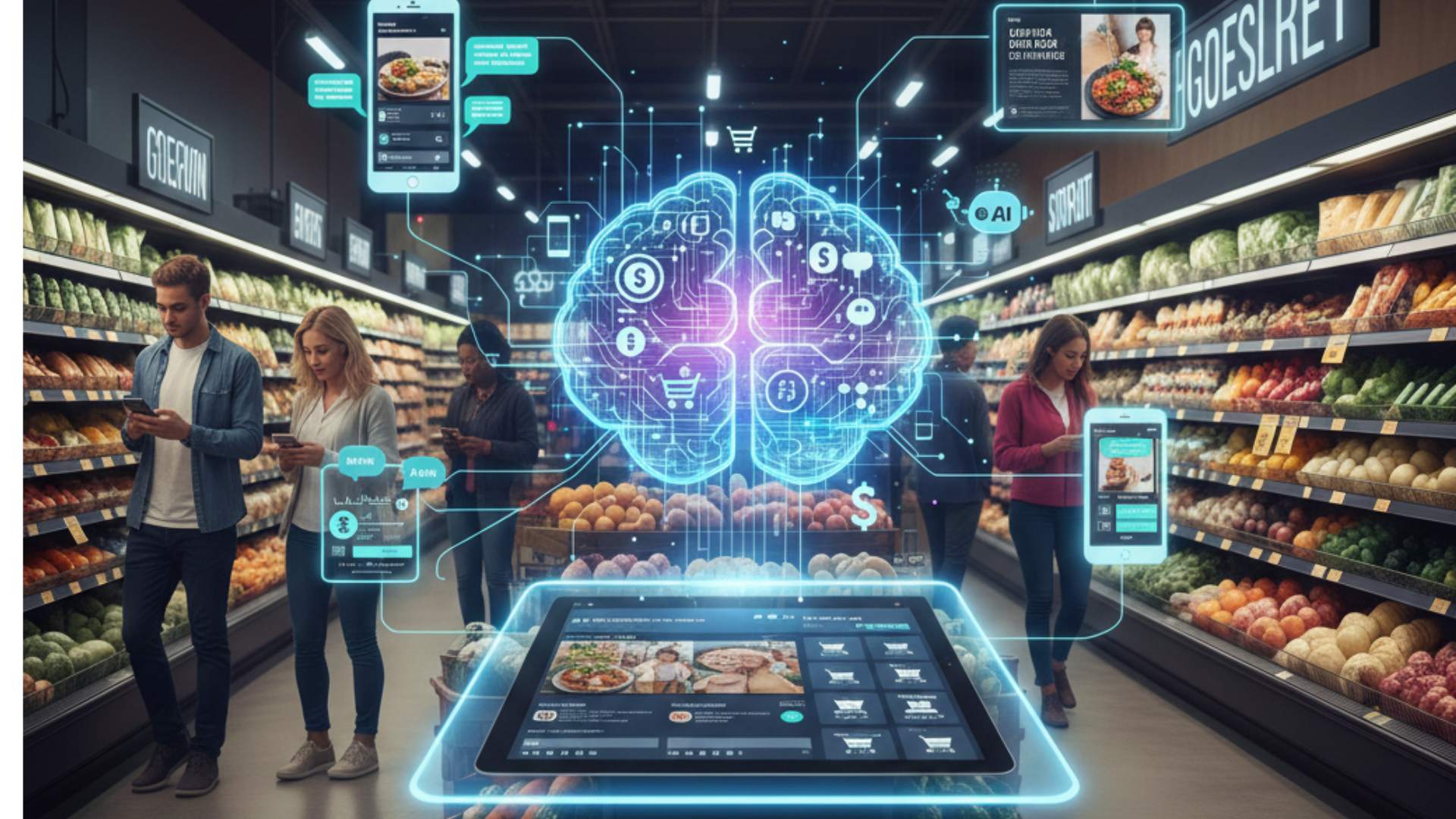
5. AI lowers the barrier to entry.
Independent grocers don’t have data science teams. But AI-driven business intelligence tools can now analyze trends, compare year-over-year performance, and even allow owners to ask questions through conversational dashboards.
This is how independents move from reactive to strategic.
The most important message?
The cost of not owning your customer data is greater than the cost of investing in shopper engagement.
If you’re an independent grocer, waiting is not a strategy.
The stores that act now — who implement loyalty, unify their data, personalize communication, and build retail media capabilities — will be the ones opening their next locations, while others struggle to maintain margins.
The future of grocery isn’t bigger.
It’s smarter.