In today’s grocery business, data is the one thing that can make the difference between success and failure.
Every time a customer scans anything at the register, uses a digital coupon, or logs into a mobile app, they provide you useful information about how they shop. But a lot of independent grocery stores have this treasure of information and aren’t using it wisely.
That’s where data-driven marketing for grocery stores comes in. It turns raw data into useful information that boosts loyalty, engagement, and profits.
Shopper Direct’s all-in-one platform lets independent and regional supermarkets use their consumer data through a connected system that incorporates loyalty programs, kiosks, CRM, and mobile apps. This helps them make better decisions and see measurable results.
Why Data Is the Most Important Part of Grocery Marketing
The modern shopper wants things to be relevant. Generic deals don’t work anymore; customers want deals that fit their habits, schedule, and preferences.
McKinsey & Company says that organizations who use data-driven personalization get 5 to 8 times more return on their marketing spending and can boost sales by 10% or more.
For grocery stores, this means being able to:
• Find high-value consumers and reward them in smart ways.
• Guess which items will sell best in each store.
• Make promotions that change in real time.
Retailers can combine all of their customer data from all of their touchpoints, from the point of sale to mobile, and make better, faster marketing decisions by using Shopper Direct’s integrated loyalty and grocery store CRM and loyalty solution.
Making loyalty into a measurable return on investment
A program for loyal customers at a grocery store ROI isn’t only about keeping track of points; it’s also about seeing how they affect things. Grocers may finally answer the important question, “Which promotions really work?” using data-driven marketing.
Shopper Direct’s data analytics tools assist stores figure out the return on investment (ROI) of their loyalty programs by looking at things like:
• The average amount spent by loyalty members compared to non-members.
• The number of times people visit before and after joining the program.
• The rate at which targeted offers are redeemed.
Grocers can see clearly what makes customers come back and stay with them for a long time—it’s not simply short-term discounts—by linking every marketing to data.
Making the Connected Marketing Ecosystem
When all channels work together, data-driven grocery marketing works best. Shopper Direct’s all-in-one loyalty marketing platform combines these parts together:
1. Supermarkets with self-order kiosks
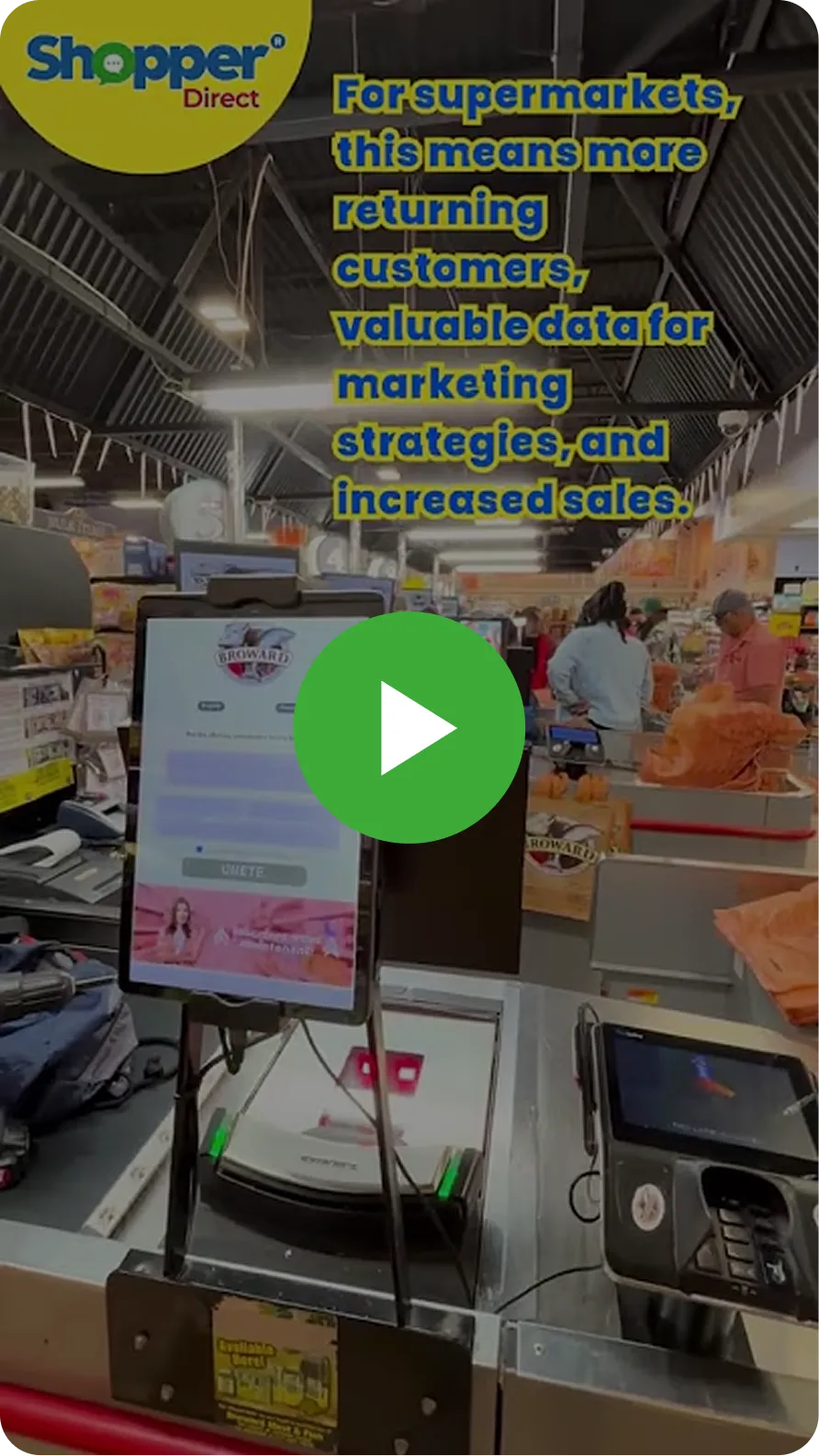
Every time a consumer uses a self-order kiosk at a grocery store, the store gets useful information about their behavior. Kiosks show what customers look at, add, or skip when they are linked to a loyalty profile. This helps grocery stores create targeted upsell offers.
They also make the customer experience better by offering convenience, targeted promos, and instant loyalty point updates at the time of purchase.
2. Grocery Store and Loyalty Program Combined : Customer Relationship Management and Loyalty
Grocers may see everything about a consumer by linking their loyalty and CRM data. This combined grocery store CRM and loyalty system makes sure that every marketing choice, from signs to app alerts, is based on genuine purchase history and preferences.
For instance, a client who often buys organic products could automatically get double points in their preferred categories, both online and in-store.
3. Grocery store loyalty rewards through mobile apps
With mobile app loyalty benefits for grocery retailers, customers stay interested even after they’ve paid. Customers can see discounts, activate rewards, and get push notifications about deals that are relevant to them.
This mobile touchpoint is an extension of in-store marketing because it sends data back to the loyalty system to improve future promotions.
The Strength of Predictive Marketing
Shopper Direct’s AI-powered products help independent grocery stores switch from reactive to predictive marketing. Grocers can predict product trends, improve promotions, and cut down on waste by looking at data on loyalty, purchases, and interaction.
Forrester Research shows that companies who use predictive analytics are 2.9 times more likely to see revenue growth that is higher than the norm for their industry.
The future of grocery growth is data-driven marketing.
Independent and regional grocery stores that use their data can compete with national conglomerates. Supermarkets can boost engagement, retention, and profits by linking loyalty programs, kiosks, CRM, and mobile apps through a unified data-driven ecosystem. This also helps them understand their customers better than before.
Shopper Direct’s all-in-one program makes it possible for every independent grocer to make this change by turning data into decisions and customers into passionate consumers.